Loblolly pine, water oak and red maple, common across Hickory yards, each carry their own disease and pest risks that show up as dead or dying sections of canopy. See our Tree Removal page for the local climate detail behind that.
Deadwooding or Full Removal, Which Do You Need?
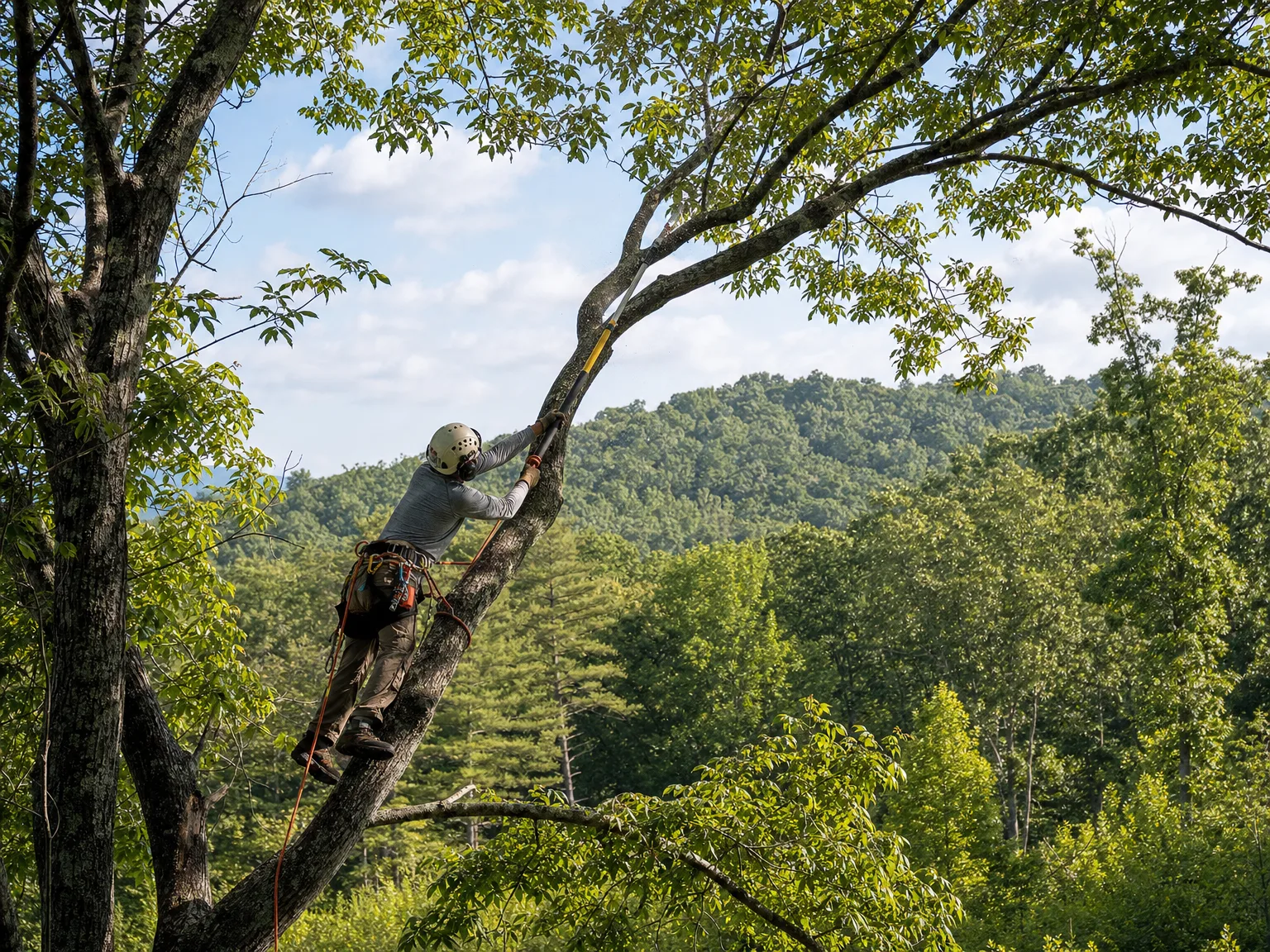
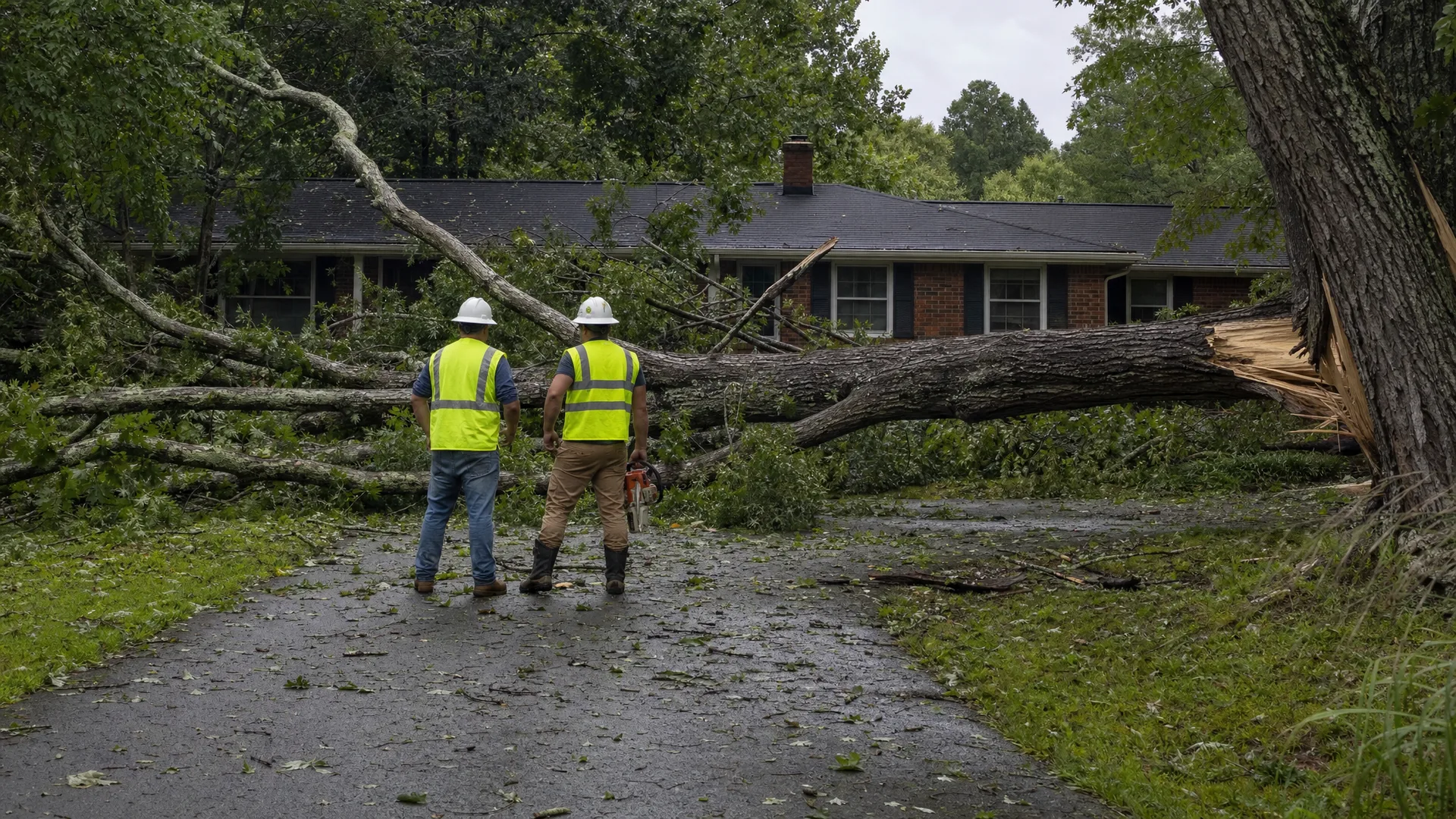
Three situations get called about a dead or sick-looking tree, and they are not the same job. A tree that is mostly healthy with a few dead limbs, often from age, storm damage or shading out lower branches, usually just needs those limbs removed. That is called deadwooding, and it leaves the rest of the canopy untouched. A tree with disease spread across a larger portion of the canopy, southern pine beetle in a loblolly pine or oak wilt in a water oak, is usually a removal candidate once established. Treatment at that stage rarely saves the tree, and the disease can spread to neighbors nearby. A tree that is already dead standing, no live foliage anywhere, is a removal job regardless of species. A standing dead tree only gets more hazardous with time, not less. The inspection tells you which of the three you actually have.
What Deadwood and Diseased Tree Removal Costs in Hickory
Removing a diseased or dead tree runs $500 to $3,000 or more, the same range as a standard tree removal, since the removal itself works the same regardless of why the tree is coming down. Deadwooding alone, just removing a handful of dead limbs from an otherwise healthy tree, costs less and prices closer to a trimming job. That typically runs $500 to $1,000 depending on how many limbs and how high they are. A full removal of a large dead or diseased tree sits at the higher end of the range, similar to any large removal. You get an exact number after the inspection, in writing, before anything is cut.