Why Trees Come Down More Often in Hickory
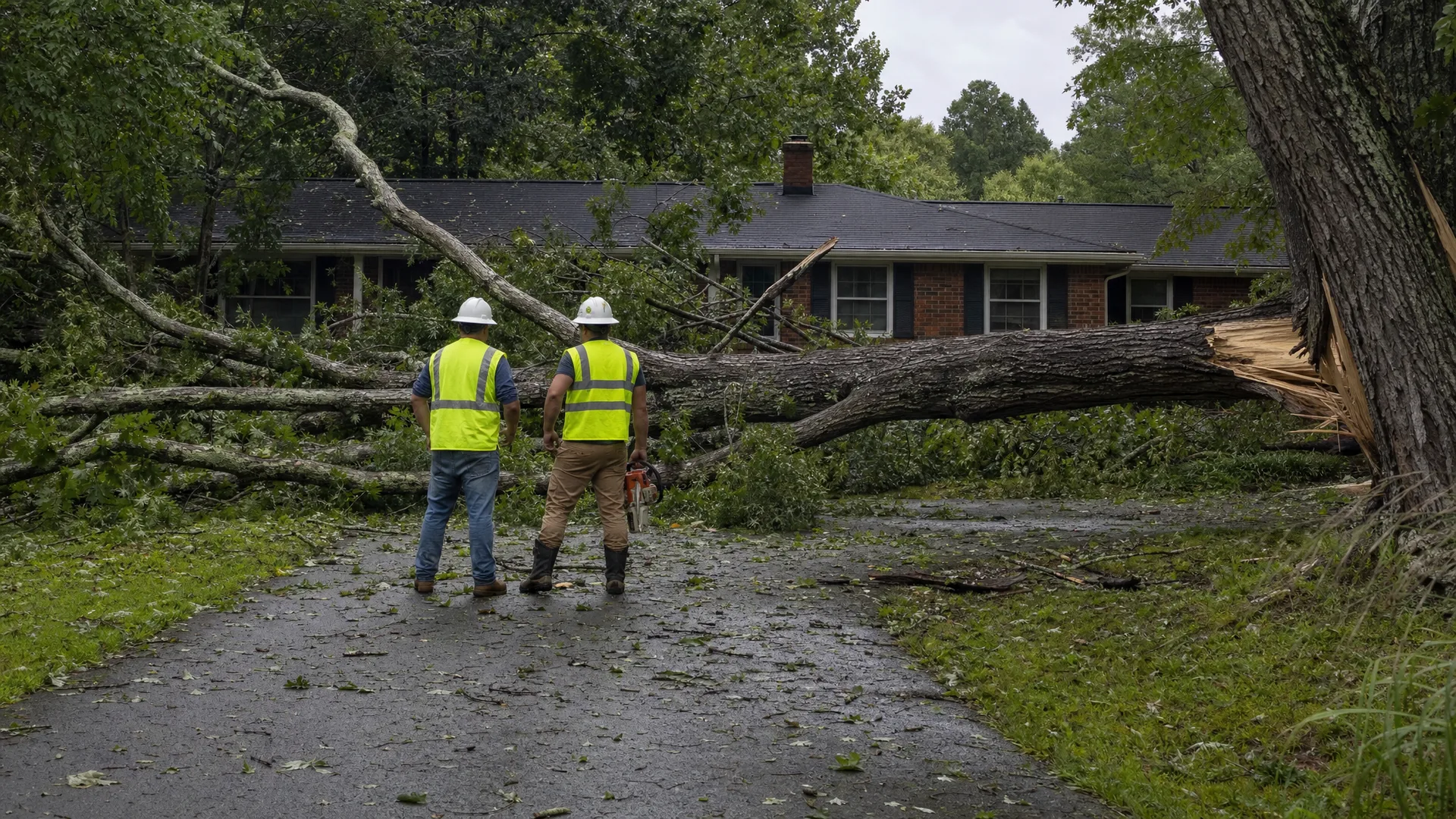
Hickory gets about 45 inches of rain a year over roughly 107 days, well above the national average, and the ground underneath most yards here is sandy loam. Sandy loam drains faster than clay, but it still saturates during a wet stretch, and it holds a tree’s roots less firmly than denser soil to begin with. That combination is why mature trees in this area are more likely to uproot whole in a storm than to simply drop a few limbs.
Winter adds a second reason trees fail here. Catawba County sees close to 85 freezing days a year, and each freeze-thaw cycle widens whatever crack or weak union was already sitting in a trunk or at the base of the roots. A tree that looked stable in October can fail in February from damage the cold did over several months, not from the storm that finally brought it down. Loblolly pine is shallow-rooted for its height and is one of the first species to go over in saturated ground. Water oak and red maple carry a different risk, splitting at a codominant trunk (a double leader with a weak union) rather than uprooting outright. The inspection identifies which of these a given tree is heading toward before the crew ever picks up a saw.
Which Tree Service Do You Actually Need?
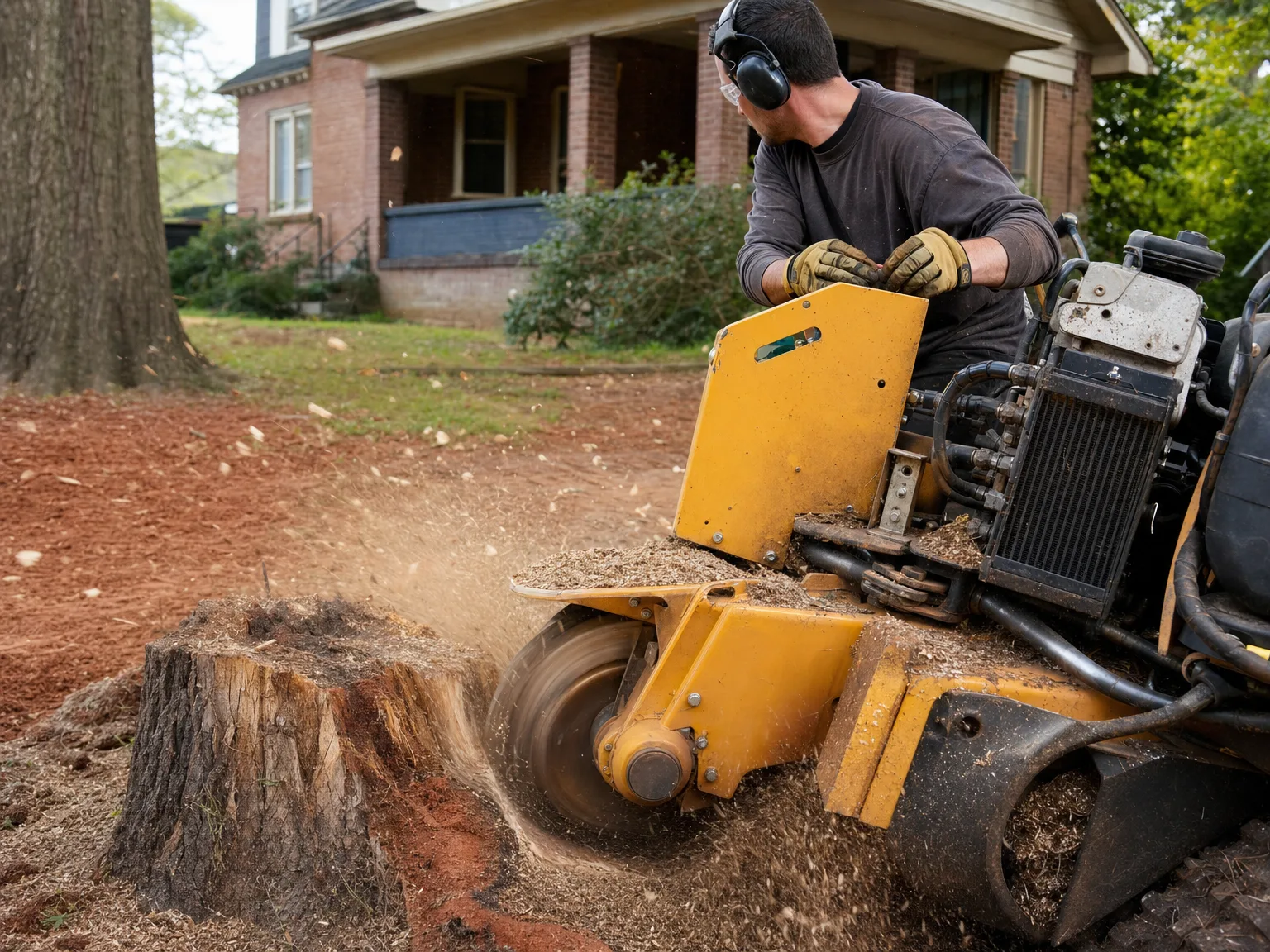
Four situations get called “tree removal” and they price and schedule differently. A dead or dying tree still standing usually needs full removal once enough canopy is gone that the tree cannot recover, rather than trimming, which only helps a tree that still has healthy growth to work with. A leaning tree after a storm may only need cabling or bracing, and only if the root plate is still mostly intact. A tree that has visibly lifted the soil on one side is coming down regardless. A tree with a split trunk or a double leader that has opened up at the union is a removal candidate regardless of canopy health, because that weak point will fail again. A stump left from an old removal is a grinding job only, no crew or crane required. If you are not sure which describes your tree, the inspection is free, including if the honest answer is that it does not need to come down.
What Tree Removal Costs in Hickory
Our minimum callout for tree removal is $500. Most residential jobs land between $500 and $3,000, driven by tree size, species, and how close the tree sits to a structure, fence or power line. A small tree under 30 feet, dogwood-sized or ornamental, typically runs $500 to $1,000. A medium tree between 30 and 60 feet, loblolly pine or a smaller maple, runs $1,000 to $2,000. A large tree between 60 and 80 feet, mature oak or pine, runs $2,000 to $3,000. Trees over 80 feet, or any job needing a crane, can run $3,500 and up. Stump grinding prices separately, starting at a $150 minimum. You get an exact number after the inspection, in writing, before we start.
How Long a Tree Removal Takes in Hickory
A tree removal has no flat number for duration. Three things drive it: whether the tree drops whole or comes down in sections, whether the crew climbs or works from the ground, and how close the tree sits to a structure. A tree in an open yard with a clear drop zone can be down within a couple of hours. A tree that has to be climbed and rigged down in pieces next to a structure takes considerably longer, since every section gets lowered on a rope rather than dropped. You get a time estimate at the inspection, based on your actual tree and yard, not a generic range.