Why Storm Damage Hits Trees Hard in Hickory, NC
Hickory gets about 45 inches of rain a year, and the sandy loam soil under most yards saturates during a heavy storm rather than draining it off. Saturated ground holds a tree’s roots far less firmly, which is why a storm here is more likely to send a whole tree over than just break a few branches. Loblolly pine, one of the most common trees in this area, is shallow-rooted for its height and is often the first to go over in high wind and wet ground. Water oak and red maple fail differently: instead of uprooting whole, they tend to split at a codominant union, two competing stems that tear apart under wind or ice load rather than one solid trunk. A tree that survives one storm with hidden root or trunk damage is often the one that comes down in the next.
What Kind of Storm Damage Are You Dealing With?
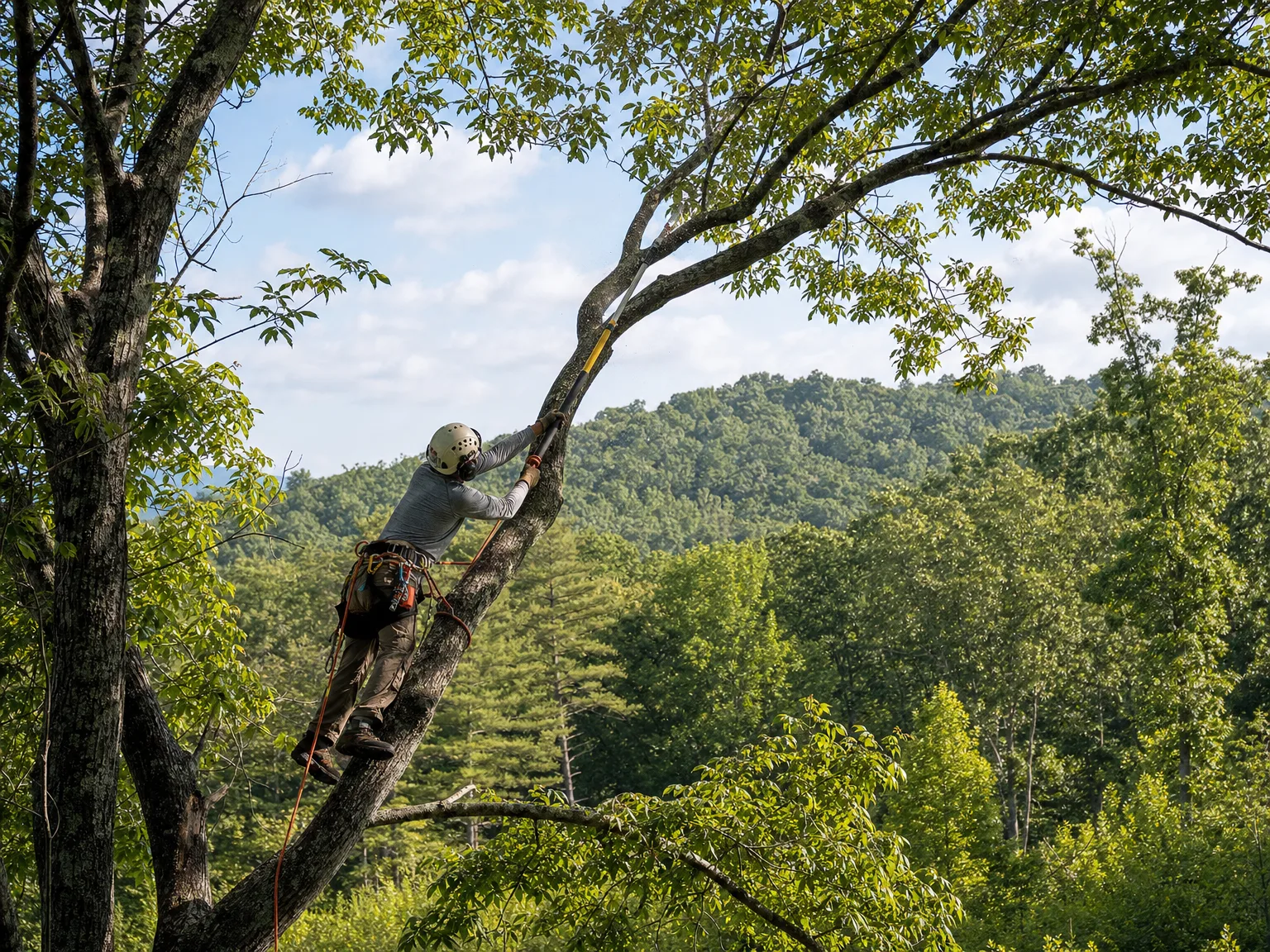
Four situations get the call after a storm, and each one changes what happens first. A tree resting on a house or garage needs the weight assessed before anything is cut, since removing the wrong piece first can let the tree shift further into the structure. A tree or limb blocking a driveway or the road usually gets cleared first for access, even if a full cleanup comes later. A hung limb or leaning tree still attached overhead is often the most dangerous of the four, since it can drop with no warning, and it gets roped and lowered under control rather than cut free. A tree already down in the yard, clear of any structure, is usually the most straightforward, cut and hauled with no special rigging required. If a tree has come down on a power line, do not approach it, and call the utility company before anyone else.
What Emergency Tree Removal Costs in Hickory
Emergency and storm work runs $2,000 to $20,000 or more, a wider range than a scheduled job because of what drives the price. After-hours timing, weather still in progress, whether a crane is needed to lift a tree off a structure, and how much of the visit is cleanup versus the cutting itself all move the number. A tree already down and clear of any structure sits at the lower end. A tree resting on a roof, needing a crane and careful piece-by-piece work to avoid further damage, sits at the top of that range. You get a price before anything starts, even on an emergency call, based on what you describe and confirmed once the crew is on site.